If a release of yours has ever been held up by hardware, buy BrowserStack. They rent thousands of real phones, and a simulator will never reproduce a camera bug or a flaky radio. That is not a gap we are closing.
Most people looking for a BrowserStack alternative are not stuck on hardware, though. They are stuck on access. Nearly all BrowserStack competitors are device clouds too, which means they inherit the same problem. A device cloud is a place your QA team goes. The PM, the designer, the support agent, the docs writer and the prospect on your pricing page all need a login and a reason to learn a testing dashboard, so in practice they never open the build at all.
VibeView puts the build where those people already are. It drops into your own web page as a component, and a link plays the app in a browser with no install and no account. BrowserStack's own documentation describes no way to do that.
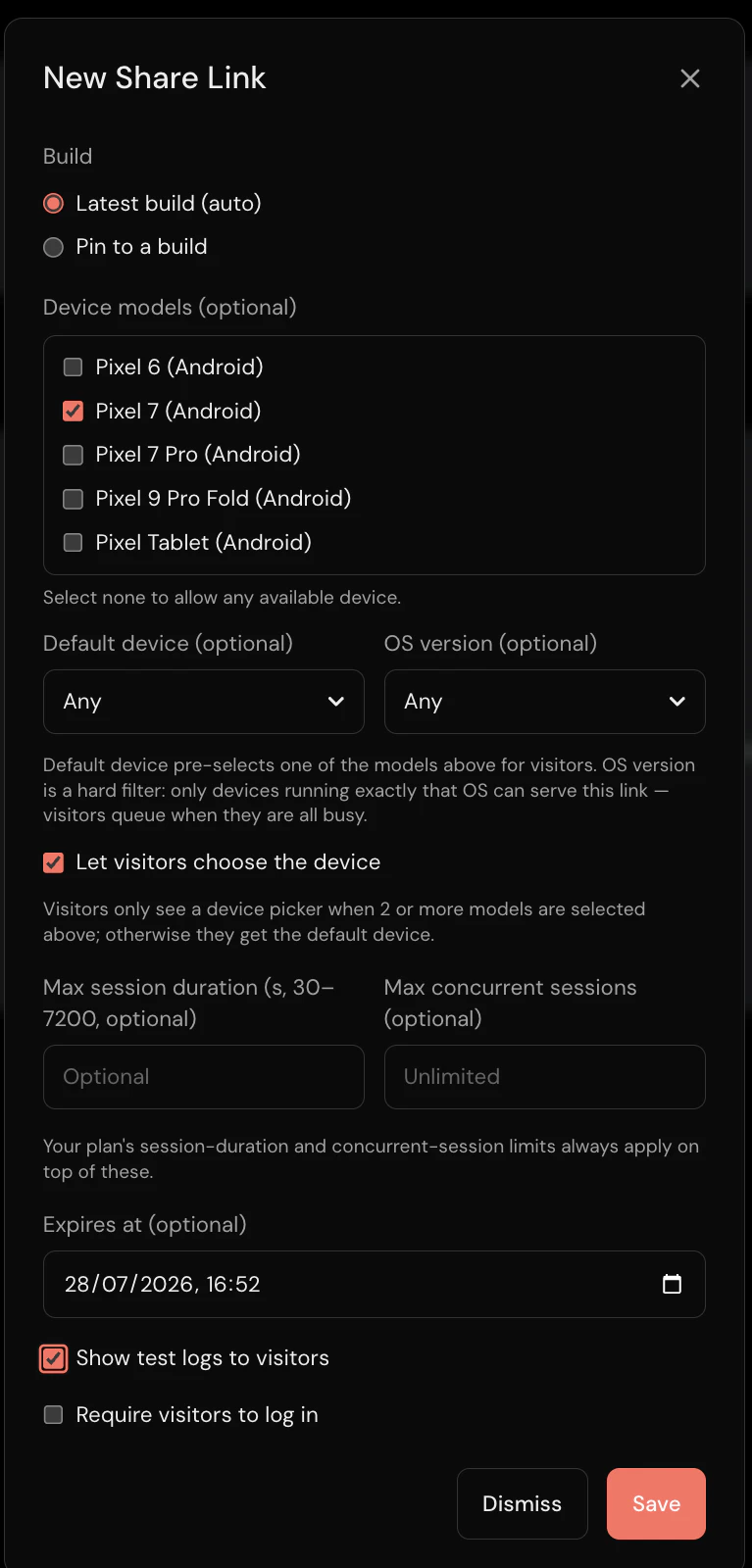
See it before you weigh it
Open a VibeView link and use a real build in your browser — no install, no account, no seat assigned to you. Then put your own build on the free tier: two sessions at once, 30 streaming minutes, a dollar of credit, no card.
BrowserStack alternatives: how VibeView compares
| What you are deciding | VibeView | BrowserStack |
|---|---|---|
| Can the device live inside your own docs or pricing page? | Yes — a component or a share link, revocable, pinnable to one build | No SDK for this is described in their Live documentation; the documented embed is Bug Capture, a reporting widget |
| Does model spend land on your AI bill or your testing bill? | Your own provider key, on every plan including free — billed at their rate, with nothing added by us | AI is built in, including a self-healing agent; no documented way to supply your own key |
| Does the run stop at the step where the screen broke? | Yes — checked after every step, mid-run, with the difference attached | Percy reviews visual changes across test runs |
| Can you reload your local code onto a live device? | Yes — vibeview dev connects the streamed device to the
Metro bundler running in your local React Native project, so Fast Refresh lands on
the cloud device about a second after you save. iOS from Windows or Linux, no Mac.
Upload a debug build once; everyday JavaScript and asset edits never need a new
upload, only adding or changing a native dependency does
| Their VS Code extension reloads an in-development website in the remote browser — a different thing from a native app on a device |
| Can several people join and interact with the same live session at once? | Yes — a host mints a link and guests join the running session as viewers or controllers, live | No — session sharing is documented as recording a video during a Live session and downloading it after the session ends, not live concurrent access for a second viewer |
| Do TV apps get first-class treatment? | Apple TV and Android TV beside phone and tablet; Roku in beta | Yes — Appium tests on Fire TV, Nvidia Shield, Apple TV 4K and Roku TV |
| Can you read the device's debug logs? | Yes | Yes — Logcat and Console in the DevTools pane |
| Does your build server get an answer it understands? | Yes — pass or fail in JUnit or JSON, pinned to one build | Yes — JUnit XML or BDD-JSON uploads |
That is the short version of VibeView vs BrowserStack: three ties, and four rows where the answer is only yes on one side. Every one of those four is about getting the build in front of a person, or keeping control of what it costs.
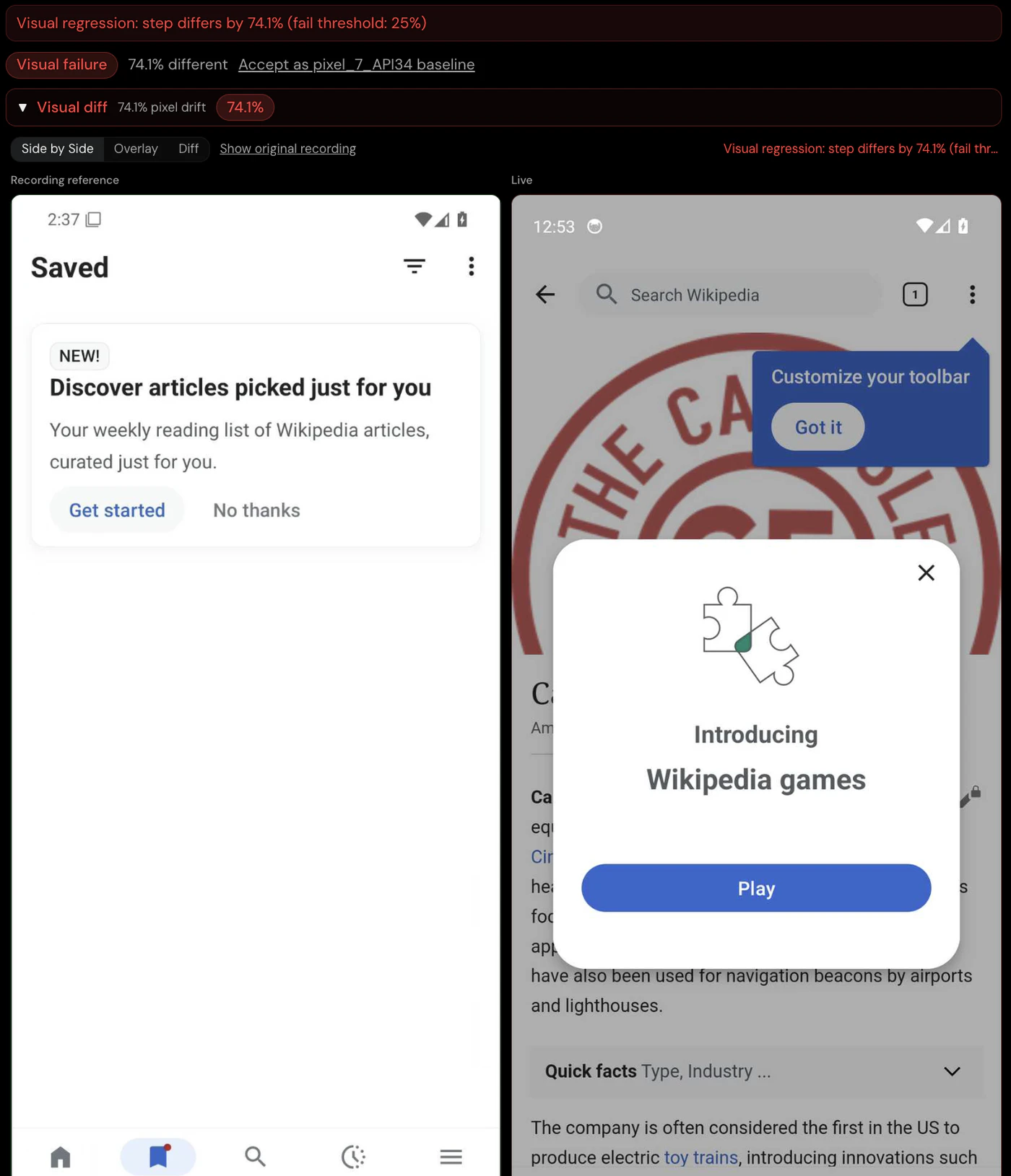
Try it on your own build
Skip the table and run the comparison yourself. Upload your own .app or .apk, embed it the way the live device above is embedded, and put it in front
of one non-engineer — the free tier is enough to see whether they get anywhere without
asking you a question.
What else you get with VibeView
A link anyone can open
Send a running build to a PM, a support lead or a prospect. No install, no account, no seat. You choose the devices, the session length and when the link stops working.
The build you already make
Upload the development build your team produces every day. No signing, no release process, no waiting on a store to put a change in front of someone.
Your laptop, on a cloud phone
Point it at the project you are working in and the phone updates about a second after you save. That works for iPhone from Windows or Linux, with no Mac anywhere.
Your own AI key
Bring a key from your own provider on every plan, including the free one. Model spend lands on their invoice at their rate, with nothing added by us.
Priced per company, not per person
Adding the support team, a designer or a salesperson is a decision you make once — no seat to buy, no licence to reassign. Team size still scales with your plan — 3 on Free, 10 on Starter, no cap on Professional — but nobody on it costs extra.
A bill with a ceiling
Streaming is metered, and overage can be switched off entirely so sessions stop rather than bill you. You set the number your finance team has to live with.
Record one flow before you decide
Tap through your app once, save it, then change a label in your code and run it again. Ten minutes, free tier, no card. That one run tells you more than the rest of this page.
When is BrowserStack the better choice?
Three things go to them, and each one is a reason to stop reading.
They rent real hardware — 30,000+ real iOS and Android devices — so camera, Bluetooth, NFC and radio bugs are visible to them and invisible to us. They capture network traffic and export it as a HAR file, which we do not do at all. And they run the Appium and XCUITest suites you already have, where VibeView would mean re-authoring those flows in its own format.
Which of your bugs actually fall on that side is a shorter list than it sounds, and simulator vs real device testing works through it row by row rather than asking you to take our word for it.
Model your worst month, not your average one
Add up the minutes a release week would really burn, price the overage, then set it to stop rather than bill. Send us the workload and we will tell you plainly whether the plan covers it. We would rather lose the deal than have you find the number in month two.
Frequently asked questions
Is VibeView a real BrowserStack alternative?
It replaces part of the job. BrowserStack rents real devices; VibeView runs simulators and emulators. If your test plan depends on real silicon, nothing here changes that. If your problem is that the people who need to see the build cannot get to it, VibeView is the closest thing to a fix among BrowserStack alternatives.
Can you embed a BrowserStack device in your own web page?
Not according to their documentation. BrowserStack Live describes launching sessions from the dashboard, an integration URL or the VS Code extension, and no SDK that puts the device interface in an arbitrary page. VibeView ships a component and a share link for exactly that.
We already have Appium suites. Do we throw them away?
Not for BrowserStack, no — they run them. That is a genuine reason to keep BrowserStack for the suites you trust, and to add VibeView for the demos, embeds and exploratory work it is better at. Plenty of teams run both.
What does one person cost before they can look at a build?
Nothing extra per person on VibeView — you pay per company, not per seat, and the free tier is a tier rather than a trial. Team size still scales with the plan: Free caps a team at 3 members, Starter at 10, and only Professional is uncapped, but nobody added beyond that costs extra. BrowserStack's entry plan is priced for a single user with a minute budget, so four people who need occasional access is four decisions on one side, and a plan choice on the other.
Which alternatives to BrowserStack should I look at besides this one?
If you need the hardware, look at the other real-device clouds, because that is a different product category and we are not in it. If you need the build in front of people who will never install anything, VibeView is the one built for that.
What does it cost us if the bill runs away?
It cannot. Overage draws down usage credit, and you can switch overage off so sessions hard-stop instead of billing. Model the worst week of a release, set the ceiling, and it will hold.
Try it on your own build
Put your current build on the free tier and send a link to one person who is not an engineer — the PM, a support lead, the prospect who asked for a demo. If they open it and get somewhere without asking you a question, that is the entire argument of this page, proved on your app in ten minutes.
Published 28 July 2026 · BrowserStack capabilities and pricing verified 27 July 2026