Platforms
VibeView streams simulators and emulators — not physical phones — so what each platform supports differs, and so do the limits. Roku is the exception in both directions: it is real hardware, streamed, and it has no cloud builds or store submission. Each page below states what works and what does not.
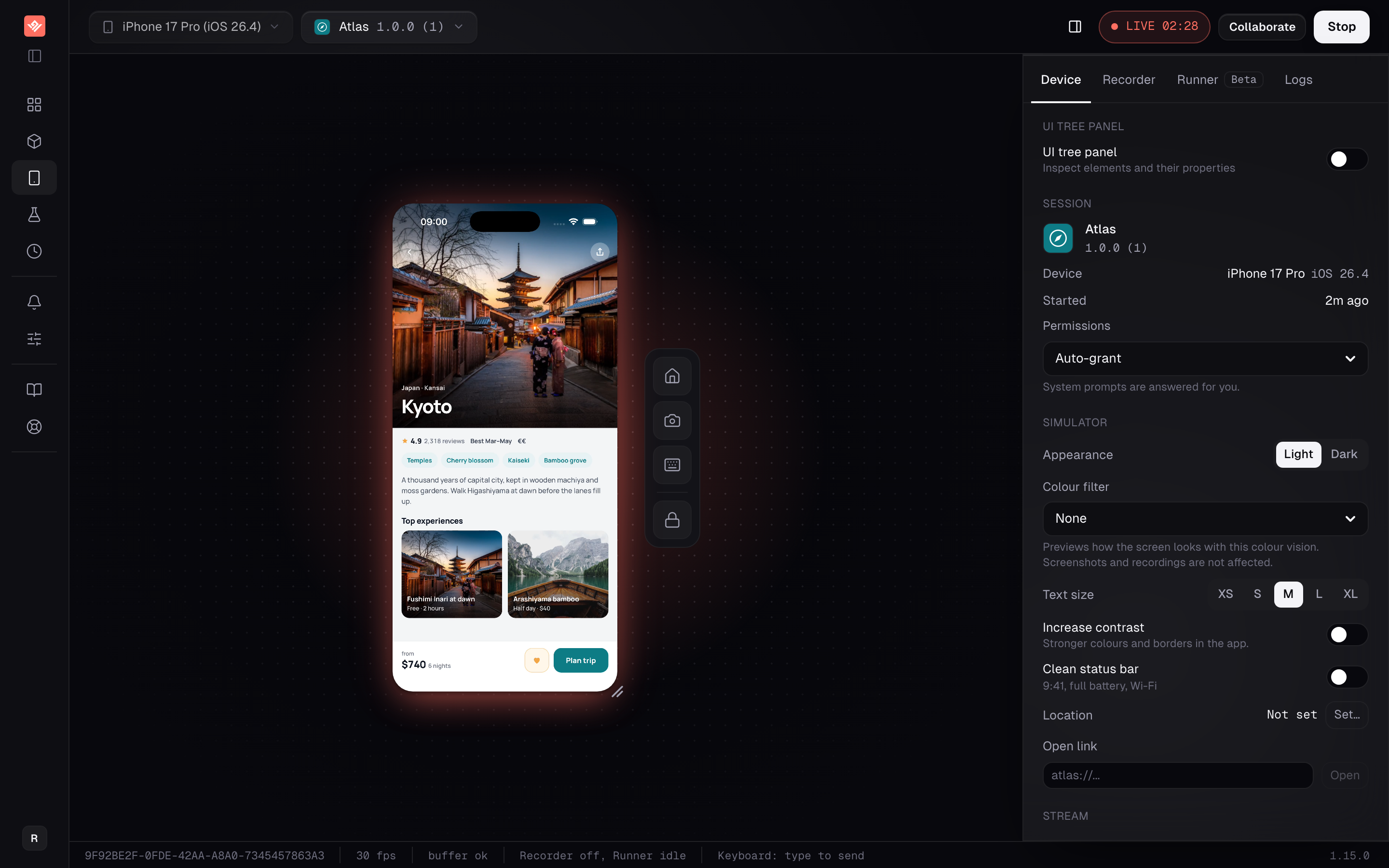
Phone and tablet · Simulator
iOS simulator
Run an iPhone or iPad from Windows or Linux — the Mac the simulator runtime needs is ours, not yours.
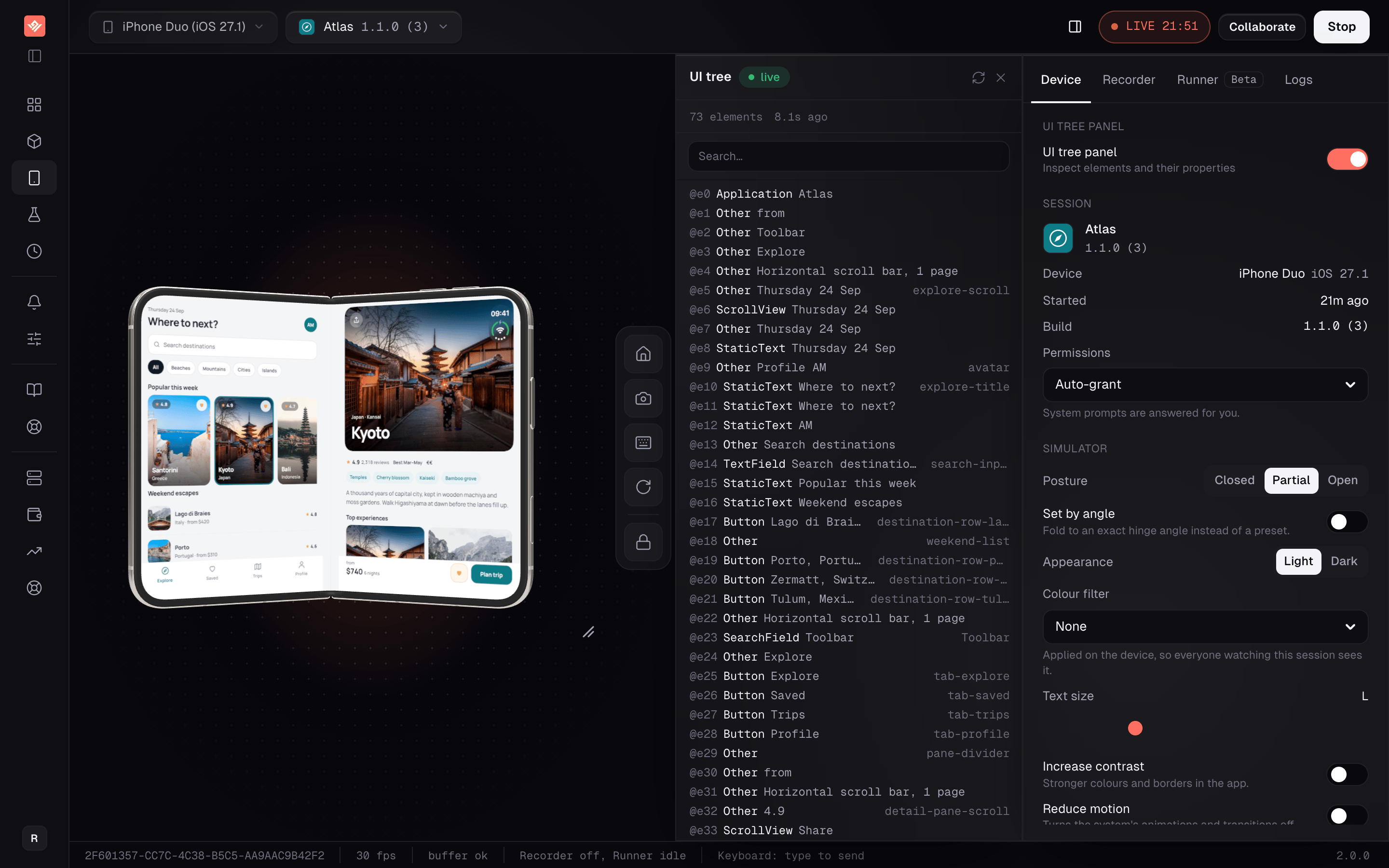
Foldable phone · Simulator beta
iPhone Duo simulator
Apple’s foldable on the iOS 27.1 beta runtime: fold it to a preset or an exact hinge angle, from a browser or an agent.
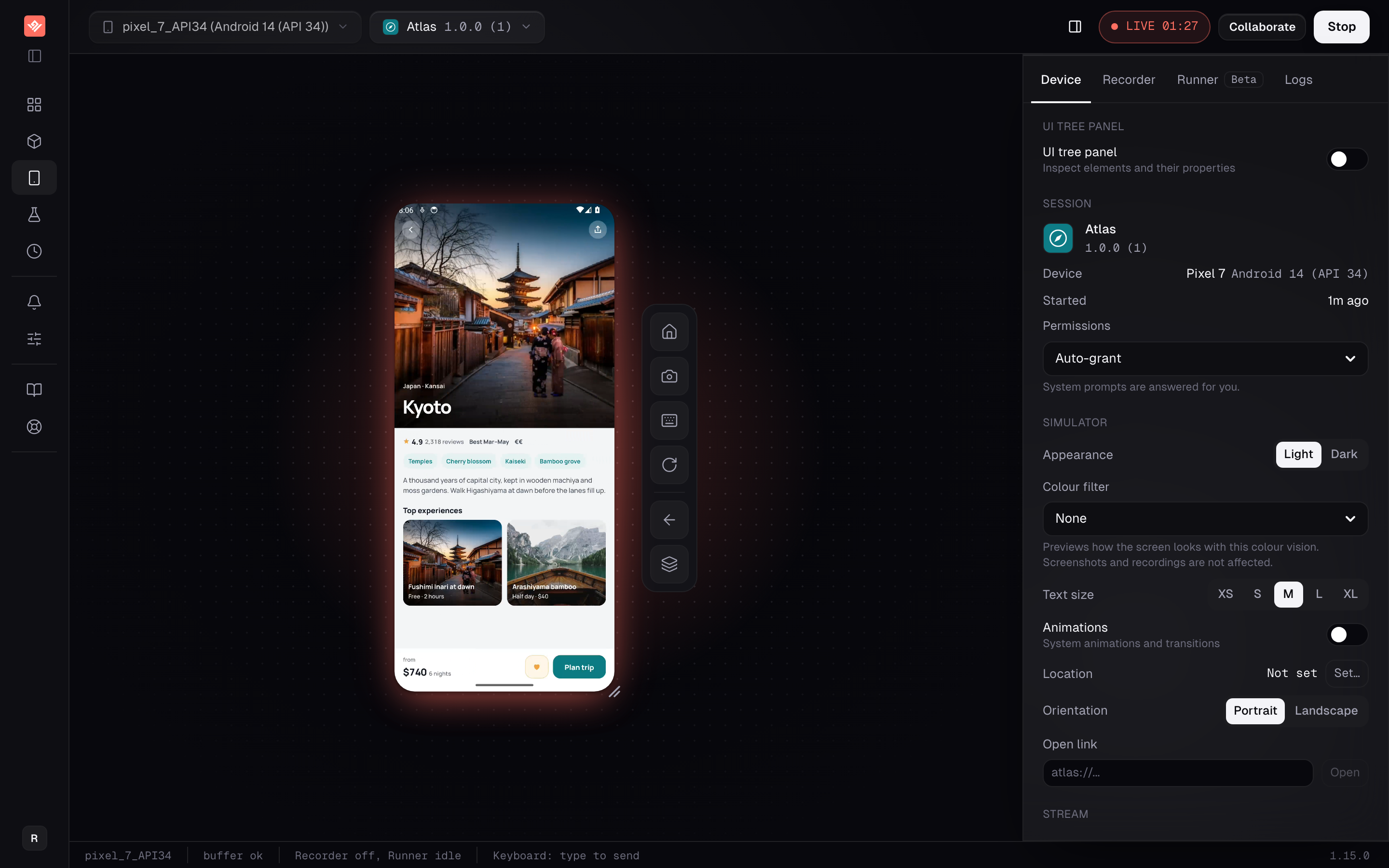
Phone and tablet · Emulator
Android emulator
Several emulators at once, each one a URL a colleague, a customer or your pipeline can open.
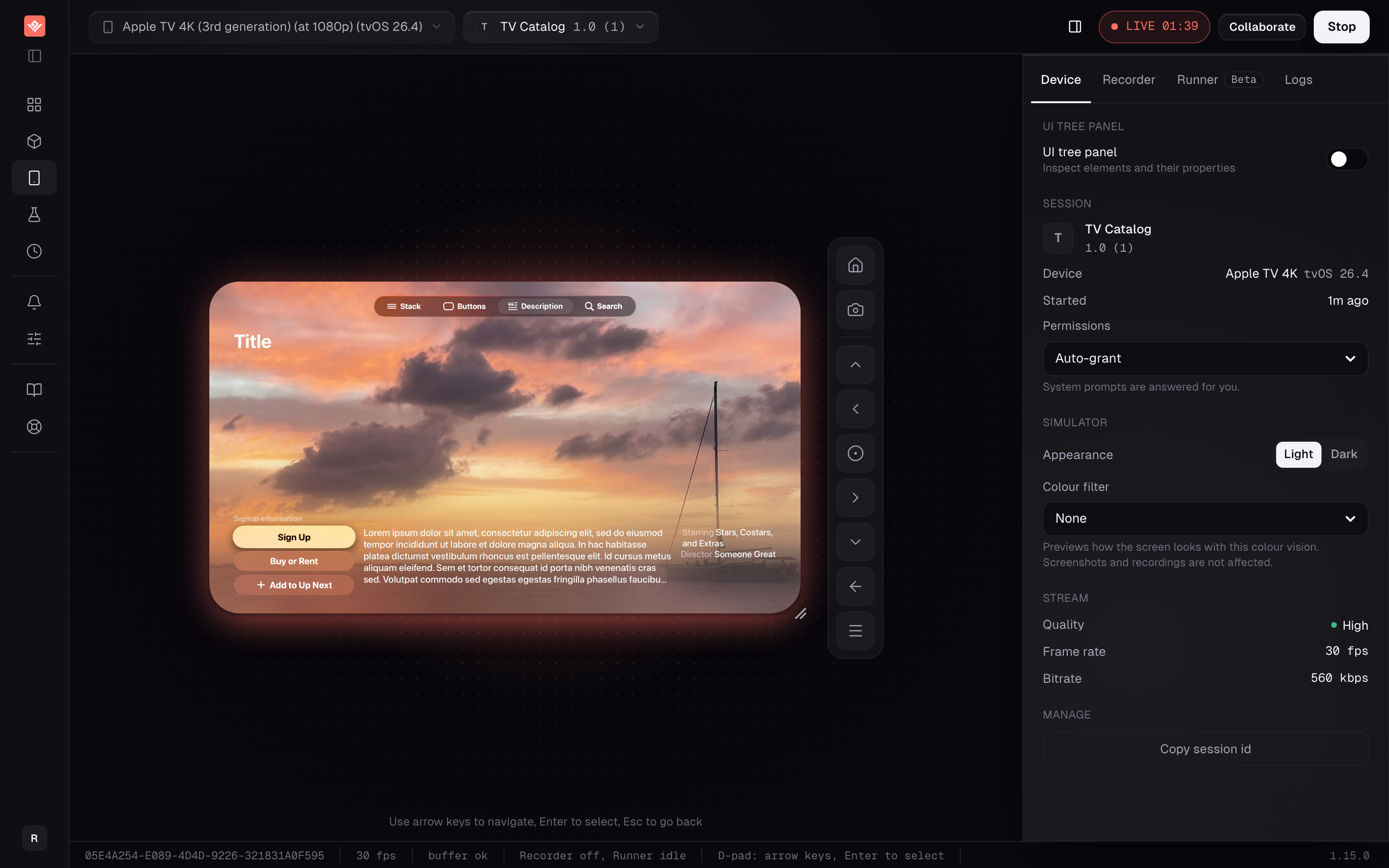
Television · Simulator
Apple TV simulator
d-pad control with focus read from the platform itself, so a test survives a moved tile.
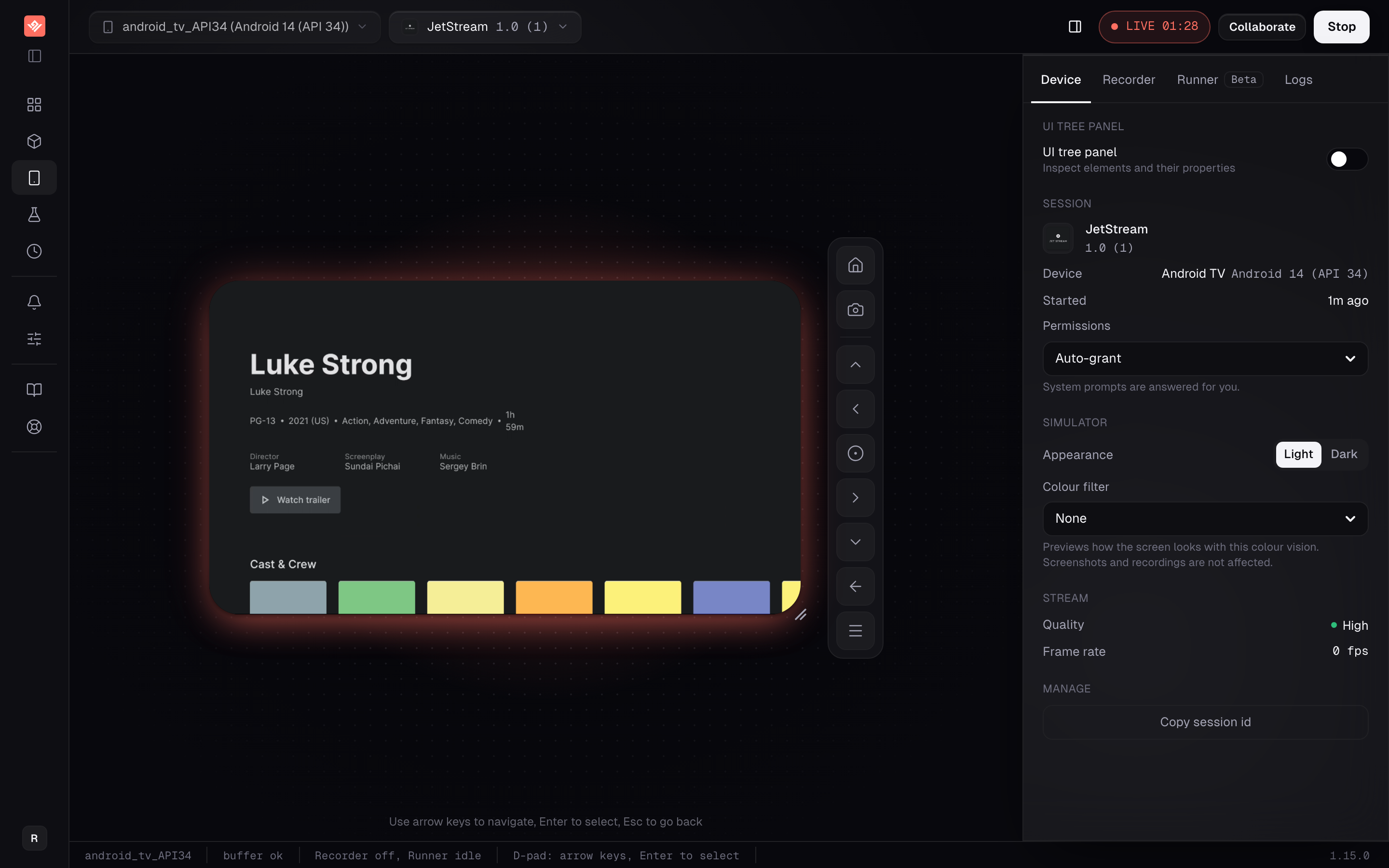
Television · Emulator
Android TV emulator
One APK for phone and TV, with focus-verified replay and no Play Services to depend on.
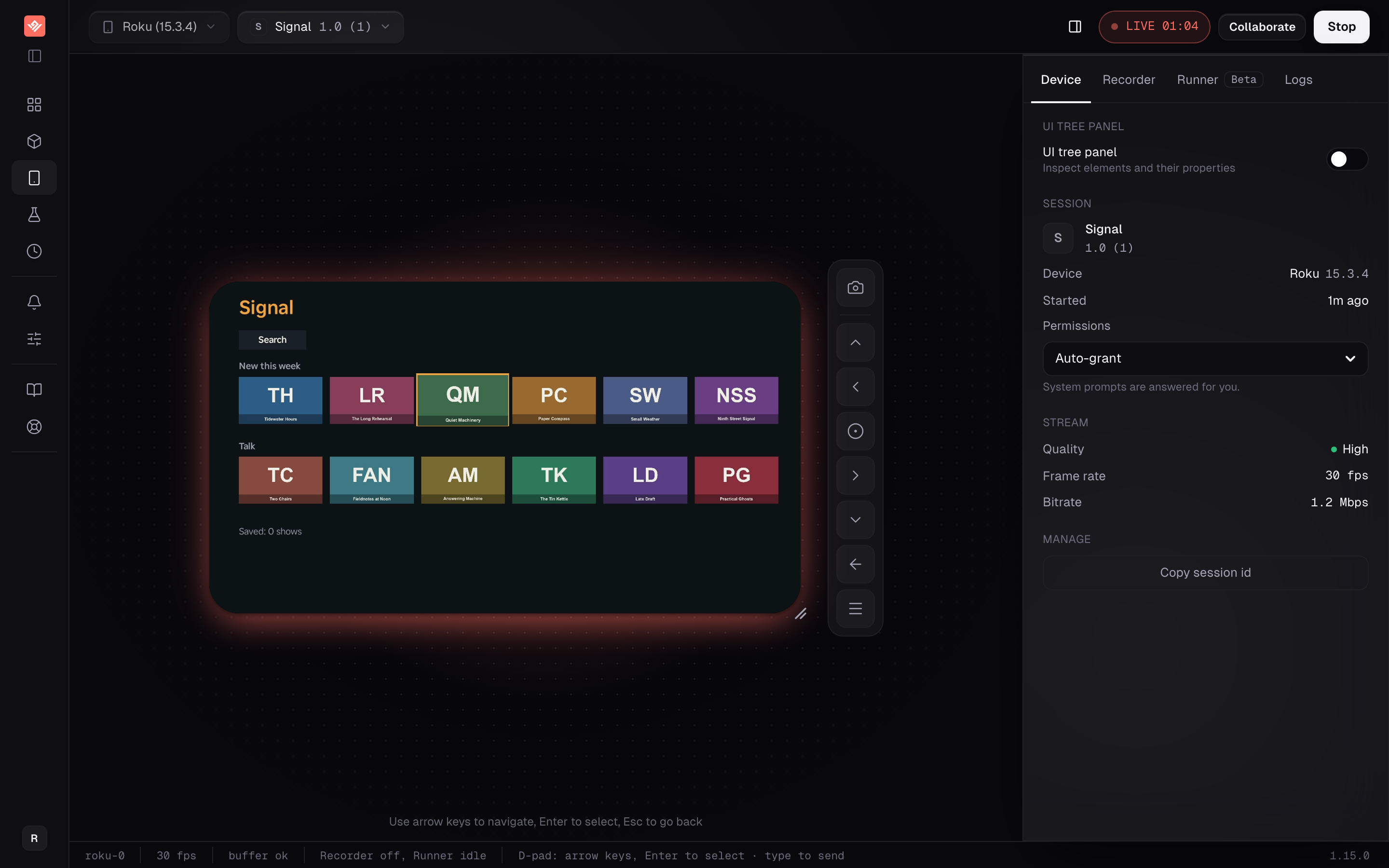
Television · Real hardware
Roku
Real Roku hardware, not an emulator. Channel upload, remote, UI inspection, agent control, recording, test runs, share links and embeds.
Phone and tablet
The iOS simulator is the one most people come for, and the reason is usually the Mac. Running an iPhone simulator locally needs macOS underneath it; running one in a browser tab does not, so a Windows or Linux machine can drive an iPhone or iPad without a Mac on the desk.
The Android emulator solves a different problem. Android tooling runs anywhere, so the constraint is not the operating system — it is that an emulator on your laptop is reachable only by you. A device that is a URL can be opened by a colleague, a designer, or a support agent.
The iPhone Duo simulator is Apple’s foldable on the iOS 27.1 beta runtime. Locally it needs Xcode 27.1 on an Apple silicon Mac; here it folds in a browser tab, to a preset or an exact hinge angle, and a coding agent can fold it from the command line.
Television
TV platforms differ from phones in one way that changes everything about testing them: there is no touch. Navigation is a d-pad moving focus between elements, so a test has to reason about what is focused rather than where to tap.
Apple TV and Android TV both run as cloud simulators with real d-pad control and focus-aware tests. If you ship a phone app and a TV app from the same codebase, the Android TV page covers driving both from the same APK.
Roku is the exception and the page says so up front. This is real hardware being streamed, not Roku's new cloud emulator: you can upload your channel, drive the remote, inspect the UI, hand the device to your coding agent, and record, replay and run tests on it, in CI too. Read that page before planning around it.
What a simulator will not tell you
Worth being direct about, since every page here except Roku is a simulator or emulator. Some classes of bug only appear on physical hardware — anything involving the camera, real battery behaviour, cellular radios or thermal throttling. That set is shorter and more specific than the argument usually suggests, and knowing exactly what is in it is what lets you run most of a test suite on simulators honestly. Simulator vs real device goes through it properly.