iOS simulator for Android: what actually works
Aurimas Mickys — Founder, VibeViewPublished 2026-07-30Updated 2026-07-30
There is exactly one genuine iOS emulator for Android, and it almost certainly cannot help you. touchHLE is a free, open-source, high-level emulator written in Rust, distributed under the MIT licence, and it does run on Android — AArch64 devices only. What it emulates is 32-bit iPhone OS 2.x and 3.0 apps, roughly the 2008 to 2011 era, and its developer has stated it will never work with 64-bit applications.
Its own FAQ is blunt about the rest: touchHLE runs a relatively small number of those early games, and the vast majority even of the supported versions do not currently work. Its compatibility database rates 272 apps as crashing immediately without any user interaction. On Android specifically, the port has been tested with Wolfenstein 3D and Super Monkey Ball, and gameplay is not complete.
So if you came here to run a modern iPhone app on an Android phone, the honest answer is that nothing does that. Everything else advertising itself as an ios emulator android is the part to be careful about: Quash’s analysis notes that many third-party emulators are packaged with malicious code because they are not verified on the Play Store, and that iOS is licensed to run only on Apple-approved hardware, so emulating it elsewhere breaches that agreement.
People search for how to run ios apps on android expecting a switch to flip. What exists is one emulator and its 2008-era catalogue. The useful question underneath is usually a different one: how do I see an iOS app when the machine in front of me is not a Mac? That has a real answer.
Two different people type this, and only one can be helped.
If you want to play iPhone games on an Android phone, touchHLE covers a narrow slice of titles from roughly 2008 to 2011. Searching for the best ios emulator for android will surface plenty of alternatives; the ones that are not touchHLE are what the warning above is about.
If you are building or testing an iOS app from a Windows machine, a Linux box or a Chromebook, keep reading. Your problem is not that you need iOS on Android. It is that you need an iOS simulator you can reach.
Because it ships inside Xcode, and Xcode is macOS software. Apple’s Xcode support page gives the supported macOS versions for the current release as macOS Tahoe 26.4 or later, and lists only macOS versions as supported platforms — so the iOS Simulator that ships with Xcode cannot be installed on Windows, Linux or Android.
Note what that does not say. It does not say you need a Mac on your desk. It says the simulator needs to run on a Mac. Those are different requirements, and the gap between them is where the workable options live.
The simulator runs on Apple hardware elsewhere and streams to your browser. Appetize.io runs apps this way in a web browser, using Android emulators and iOS Simulators rather than physical devices. VibeView works the same way.
Quash’s analysis recommends physical-device cloud platforms alongside macOS-based Xcode simulators, which it describes as suitable for UI validation. If the bug involves a camera or a radio, this is the row you want.
You do not need a Mac to open a build, but something has to produce one. A macOS build agent emitting a simulator build on every commit gives everyone else something to open.
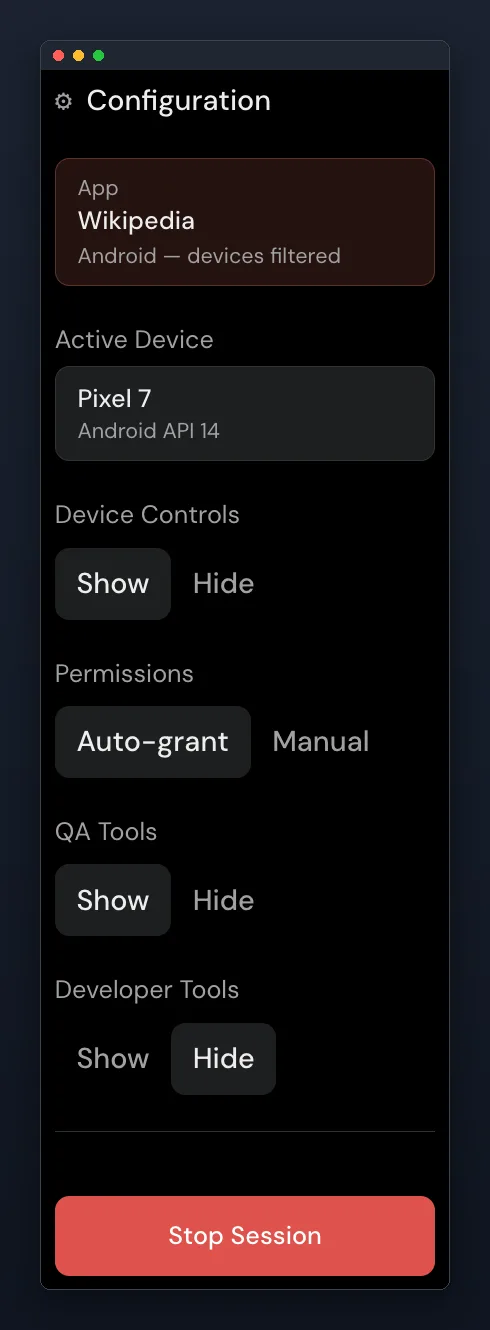
VibeView streams real iOS simulators — running on Apple hardware in our cloud — into a browser tab, alongside Android emulators, Apple TV and Android TV. Nothing installs locally, and the machine you sit at does not have to be a Mac. That is the honest version of what people reach for when they search for an iphone emulator for android: not iOS running on Android, but an iOS simulator you can reach from a machine that is not Apple’s.
If iOS is the platform you care about, the iOS simulator in your browser page goes deeper than this guide does.
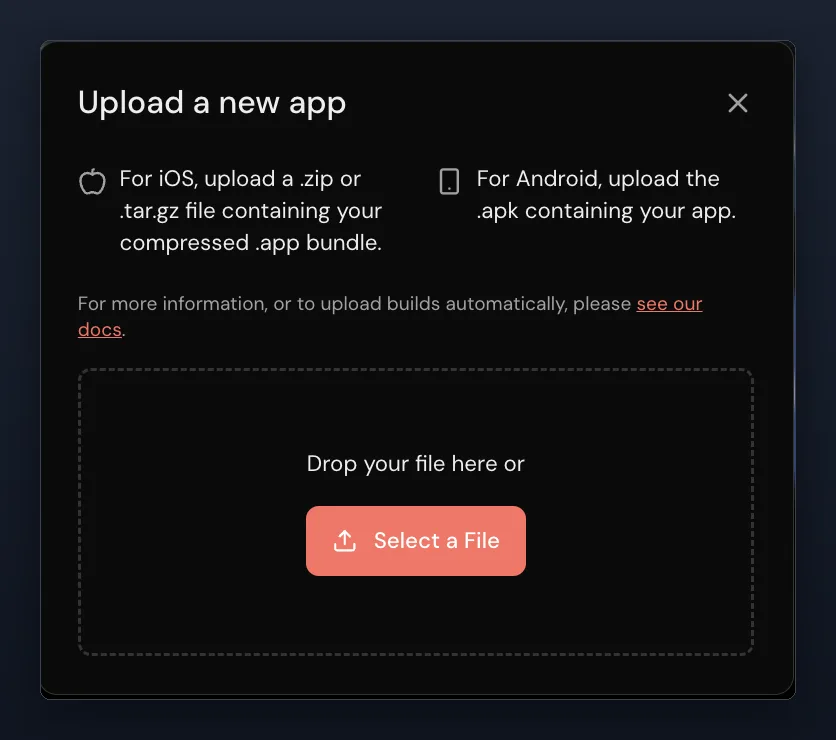
What you upload is a simulator build. iOS takes a compressed .app bundle; Android takes an .apk. A signed device build is rejected at upload, so a team producing only device artifacts today needs one extra CI target.
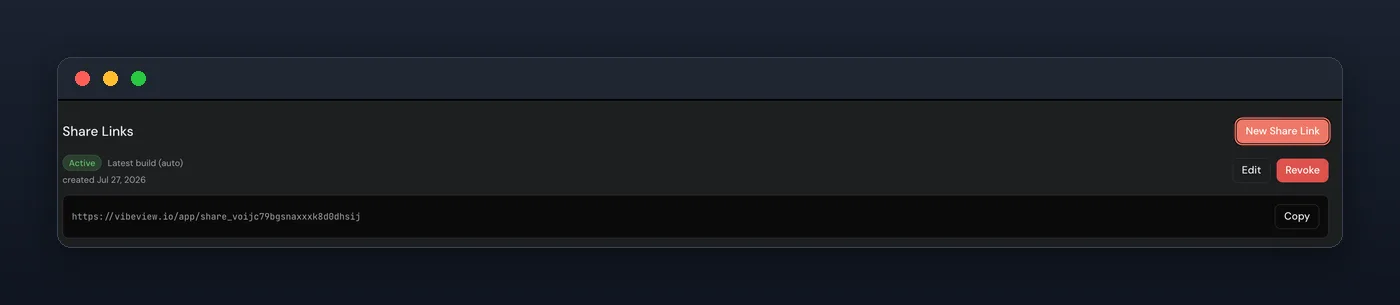
A share link then plays that running build for someone with no account and nothing installed — useful when the person who needs to see the iOS app is a PM on a Windows laptop, or a support agent who will never own a Mac.
The limits, since they decide whether this helps. Simulators and emulators only, with no physical-device cloud, so camera hardware, Bluetooth peripherals, NFC and true GPU performance need a real-device pass before release. No web browser testing of any kind. No network traffic capture yet, so no HAR export. Streaming is metered, and free-tier sessions stop after five minutes each.
The free tier takes no card: two sessions at once and 30 streaming minutes a month, in five-minute slices. Enough to open your build from a Windows or Linux machine and send one link; not enough to run a suite.
Is there a real iOS emulator for Android? One: touchHLE, a free open-source high-level emulator written in Rust that runs on AArch64 Android devices. It emulates 32-bit iPhone OS 2.x and 3.0 apps and its developer has stated it will never work with 64-bit applications. For a modern app it is not an option, and no other genuine emulator exists.
How well does touchHLE actually work? Patchily, by its own account. Its FAQ says it runs a relatively small number of early iPhone OS games from roughly 2008 to 2011, and that the vast majority of games even for those versions do not currently work. Its compatibility database rates 272 apps as crashing immediately without any user interaction.
Are the iOS emulator apps on app stores safe? Treat them with suspicion. Quash’s analysis notes that many third-party emulators are packaged with malicious code because they are not verified on the Play Store, and that iOS is licensed to run only on Apple-approved hardware. touchHLE is the open-source exception, and it does not run modern apps.
Can I run Xcode or the iOS Simulator on Windows or Linux? Not locally. Apple’s Xcode support page lists only macOS versions as supported platforms, giving macOS Tahoe 26.4 or later for the current release. The workable route is a simulator running on a Mac somewhere else, reached through your browser.
What should I use if my team has no Macs? A hosted simulator. The machine running the simulator is a Mac; yours does not have to be. Appetize.io runs apps in a web browser using Android emulators and iOS Simulators rather than physical devices, and VibeView works the same way.
If your team ships iOS and half of it runs Windows or Linux, the test is quick. Produce one simulator build, open it in a browser tab from a non-Apple machine, and send the link to whoever has been asking for screenshots.
No card, no install, no Mac at your desk. If you would rather we told you plainly whether your workload fits, send it over and we will.
Published 30 July 2026 · Tool capabilities verified 30 July 2026